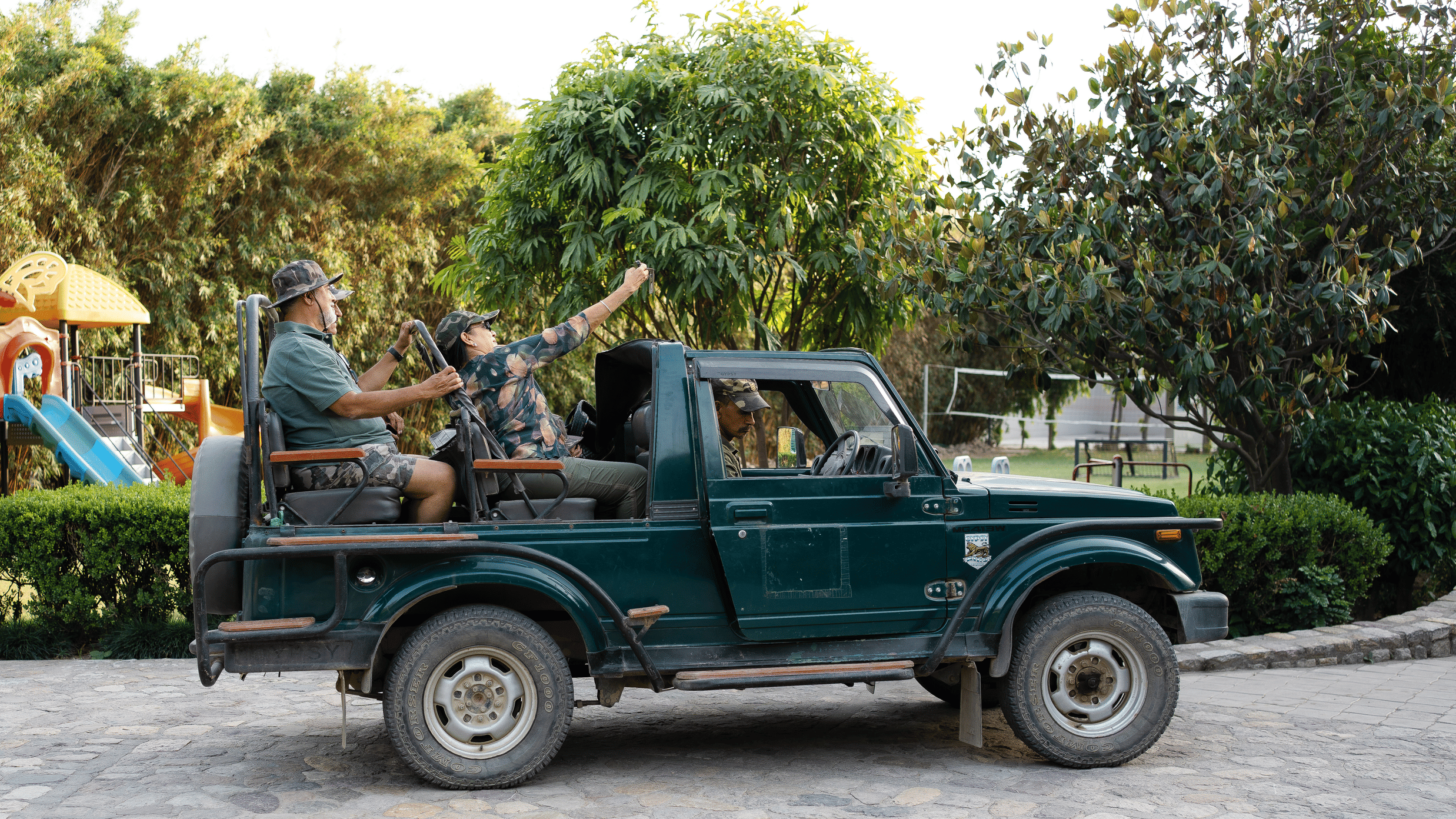
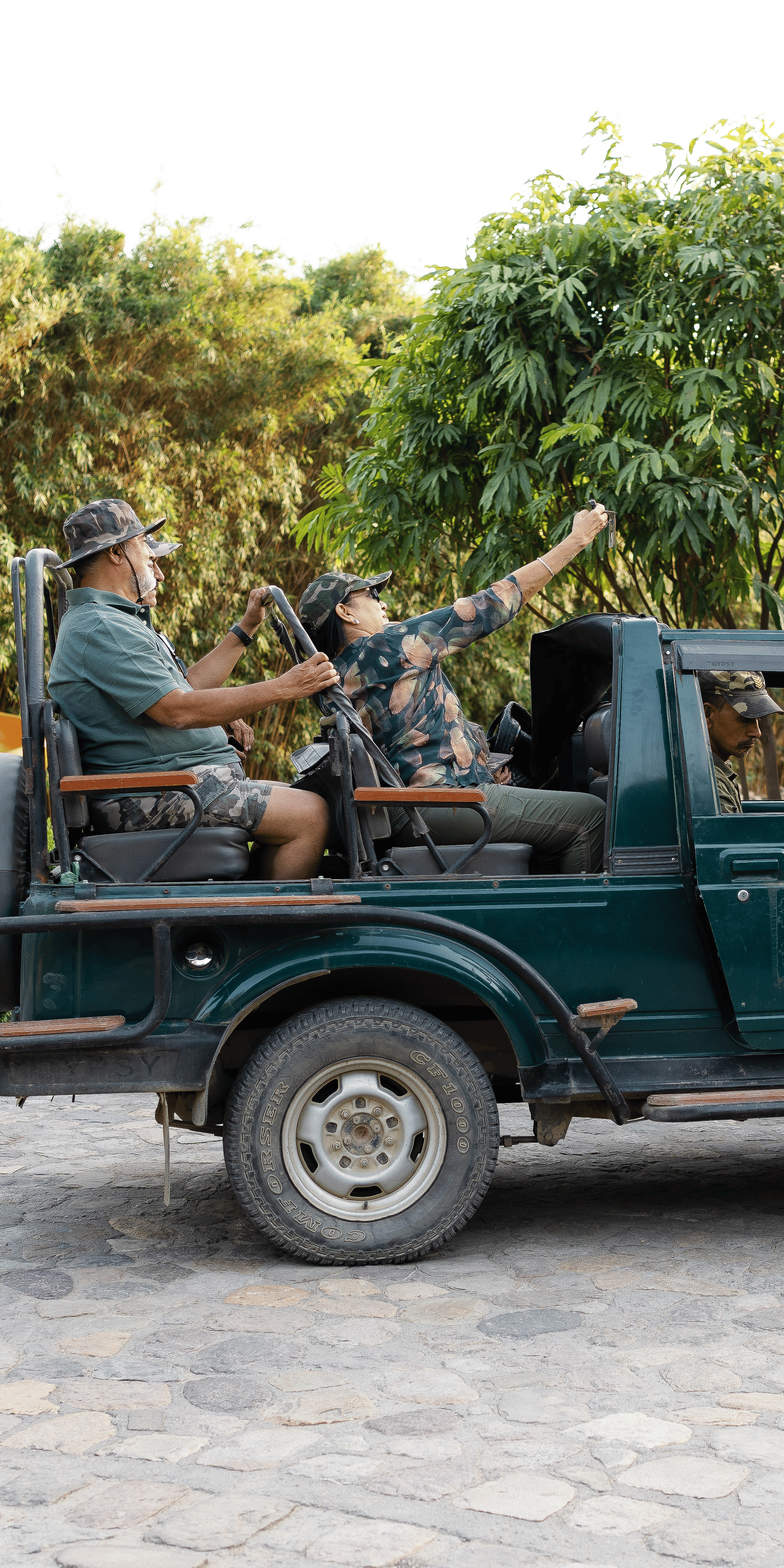
Some holidays help you unwind. Others nudge something awake in you. A wildlife safari paired with a luxury stay happens to do both.
Picture this: you leave before sunrise, the forest still half-asleep around you. The jeep rolls forward slowly, birds calling somewhere in the trees, and every small sound seems to carry weight. Your guide crouches over fresh tracks. Out past the grass, the jungle stirs. A few hours later, you are back at the resort, easing into breakfast, wandering into a beautiful room, or doing nothing much at all by the pool. The contrast is where it all comes alive.
Jim Corbett strikes this balance without trying. Thrill from the forest, comfort and care from the right stay. Travellers who want their adventure with a side of indulgence tend to find their rhythm at a luxury wildlife resort like The Golden Tusk.
Why a Safari and a Luxury Stay Belong Together
Exhilarating as a
safari is, it also asks something of you: early starts, dusty trails, long hours of patient watching. That is half the charm. The thing that lifts a good trip into a great one is whatever happens to be waiting once you come back.
Think of a well-designed luxury wildlife resort as the adventure's other bookend. Out you go at dawn, all anticipation, and back you come to a place shaped entirely around your comfort. The two need each other. Somehow, the wildness reads as wilder because your base is so calm.
Here is what that balance gives you:
Energy for the adventure: Sleep well, eat a proper breakfast, and you are sharp and ready when the forest is at its liveliest.
Recovery in style: Slip into a spa session, a quiet swim, or a long lunch by the pool, and your body resets between drives.
Closeness to the action: Stay near the safari gates, and the morning commute shrinks, leaving more time where it actually counts.
Stories worth telling: That mix of raw nature and quiet indulgence is what makes a trip feel whole rather than hurried.
Jim Corbett Wildlife Safari: The Heart of the Experience
Few safaris in the country compare to Jim Corbett. The park runs across more than thirteen hundred square kilometres of grassland, riverbank, and dense forest, and it holds the distinction of being the very first reserve brought under Project Tiger, back in 1973.
Several tourism zones make up the park, and no two share the same character. Knowing how they differ helps you plan a safari around whatever you are hoping to see.
Dhikala Zone: Open grasslands, sweeping views, and some of the finest tiger sightings anywhere in the park.
Bijrani Zone: Dense forest threaded with meadows, ideal for deer, elephants, and birdlife.
Jhirna Zone: Open through most of the year, home to sloth bears and wild elephants.
Dhela Zone: Quieter, rich in bird species, and a favourite among photographers.
Durga Devi Zone: Rugged and scenic, with plenty to reward anyone chasing rare birds.
Drives tend to run in two slots: an early-morning outing when the animals are most active and an afternoon one when the light turns soft for photography. Couples and families, after a bit of flexibility, usually lean towards jeep safaris, while bigger groups do well in the larger canters. Either way, a trained naturalist comes along to read the forest and add depth to all of it.
What Makes a Luxury Stay in Jim Corbett Special
A great safari deserves somewhere worth returning to. A
luxury stay in Jim Corbett goes well beyond a comfortable bed. The idea is to keep you wrapped in the same natural beauty you spent the morning exploring, only with a touch more polish.
The best resorts sit right along the forest line, so the wild stays close. Picture
private pool villas,
suites that open straight onto greenery, and
luxury tents that bring you near nature without taking a single comfort away.
A standout luxury wildlife resort usually offers the following:
Spacious villas and suites built for privacy and rest, often with private pools or hot tubs.
Gourmet dining that moves from local Kumaoni flavours to international favourites.
Wellness spaces for yoga, meditation, and spa treatments that loosen tired muscles.
Recreation on site, from swimming and cycling to guided nature walks.
Seamless safari planning, with the resort team sorting permits and transport so you simply turn up and enjoy.
That is more or less what The Golden Tusk has built on the edge of the park, spread across ten acres of greenery on the banks of the Dhela river, an easy hop from the Dhela and Jhirna safari zones.
Planning the Perfect Trip
A little planning goes a long way. Keep these few things in mind, and the trip tends to look after itself.
Time it right: November through April brings comfortable weather and reliable sightings, while the warmer stretch pulls animals towards the waterholes.
Book early: Permits are limited, and zones fill fast in peak season, so reserve well ahead.
Choose a base close to the gates: A shorter drive at dawn buys you more time in the forest and less on the road.
Lean on the experts: Hand permits, guides, and transfers to your resort, and the logistics stay off your plate.
Where the Wild Meets the Refined
The real beauty of a wildlife holiday is its rhythm. Adventure by morning, comfort by evening, and a thread of wonder holding the whole thing together. There is no need to choose between excitement and ease. The best trips give you both, stitched together so naturally that one quietly sharpens the other.
Jim Corbett is one of those rare places where you can chase tigers at sunrise and sink into spa-soft luxury by sundown, all inside a single day. That, in the end, is what makes it the perfect vacation.
Ready to plan yours? Contact us today to schedule a consultation or request a custom quote, and let us shape a safari and stay you will remember long after the forest is behind you.
Frequently Asked Questions
What is the best time to go on a Jim Corbett wildlife safari? November to April is the popular window, with pleasant weather and frequent sightings. The warmer months have their own appeal, too, since animals gather near water sources.
Which safari zone is best for spotting tigers? Dhikala and Bijrani tend to top the list for tiger sightings, but it depends on conditions and movement patterns.
Do I need to book my safari permits in advance? Yes. Permits are limited and fill quickly, especially in peak season.
Is it suitable for families with children? Yes, many zones and resorts are family-friendly with guided experiences for children.
What should I pack for a safari? Light clothing, binoculars, sunscreen, a hat, and comfortable shoes are recommended.
How close should my luxury stay be to the safari zones? Closer is better, as it reduces travel time and increases time inside the park.